
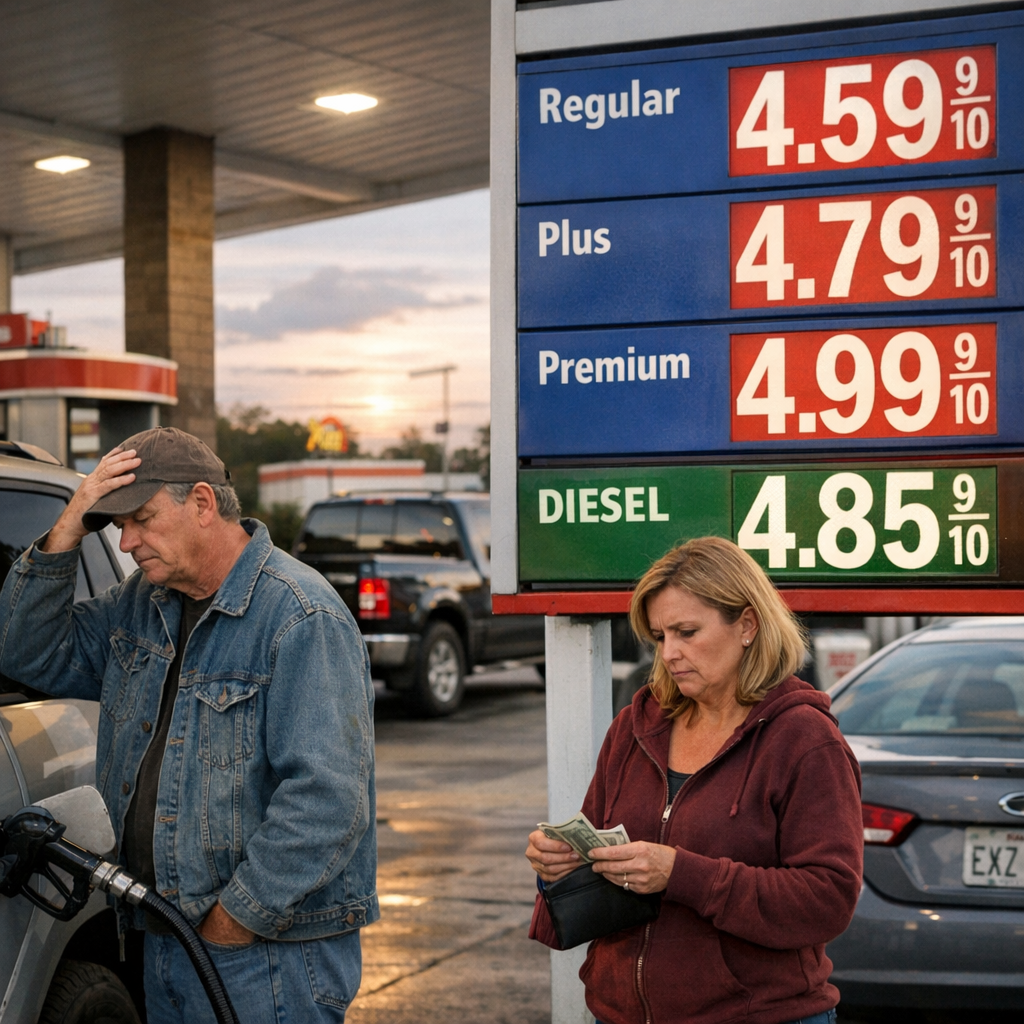
As the nation grapples with economic challenges, many Americans are expressing growing concerns over rising inflation and escalating gas prices. Recent data indicates that inflation surged to 3.8% in April, marking its highest level in three years. This uptick is largely attributed to the ongoing conflict with Iran, which has disrupted global oil supplies and led to a significant increase in energy costs. Consequently, the national average price for regular gasoline has surpassed $4.50 per gallon, with some states experiencing prices exceeding $5.
The economic strain is palpable among consumers. A recent poll revealed that 70% of Americans feel “angry” or “frustrated” about the current economic situation, with only 11% expressing enthusiasm. Additionally, 77% of respondents reported that their incomes are not keeping pace with rising prices, leading to increased reliance on credit and a decline in consumer confidence.
In response to these challenges, the administration has emphasized policies aimed at tax cuts, deregulation, and energy independence to stabilize the economy. However, the effectiveness of these measures remains a topic of debate among economists and policymakers.
For residents of Garland, Texas, these national economic trends have local implications. The rise in gas prices affects daily commutes and transportation costs, while inflation impacts the affordability of goods and services. As the community navigates these uncertain times, staying informed and proactive in financial planning becomes increasingly important.